Practical guides for better team meetings
Clear agendas, real examples, and facilitation advice for Planning Poker and sprint retrospectives.
Latest guides
Choose a topic and open the guide you need for the next team conversation.
Filter by topic

How to run Planning Poker step by step
Prepare the backlog, vote independently, discuss meaningful differences, and leave each round with a team-owned estimate.
Read guide
Story Points vs Hours: Choose the Right Estimate
Compare relative sizing, working hours and delivery dates with one practical example. Choose an estimation approach without inventing a points-to-hours formula.
Read guide
Planning Poker rules: a working agreement for your team
A practical rules reference for participation, private voting, interrupted rounds and disagreements that a number cannot resolve.
Read guide
Fibonacci in Planning Poker: How to Use the Scale
What the gaps between cards mean, why some decks use 20 instead of 21, and how to turn different votes into a useful decision.
Read guide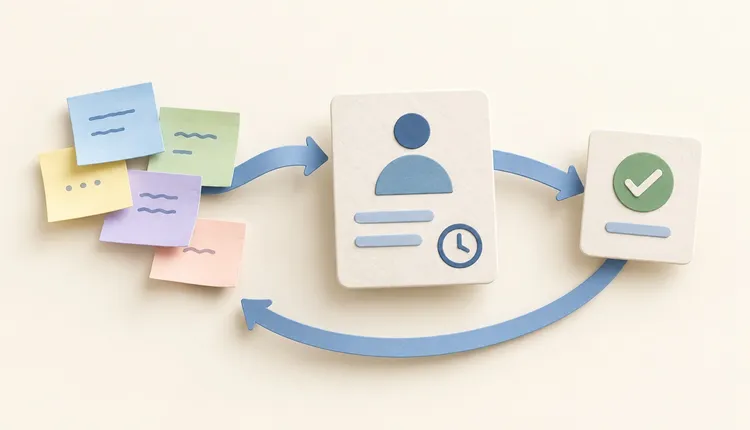
Retrospective Action Items: Examples That Make Follow-up Clear
Turn a recurring problem into one change your team can try, own, and review. These examples show what to write and what to check afterward.
Read guide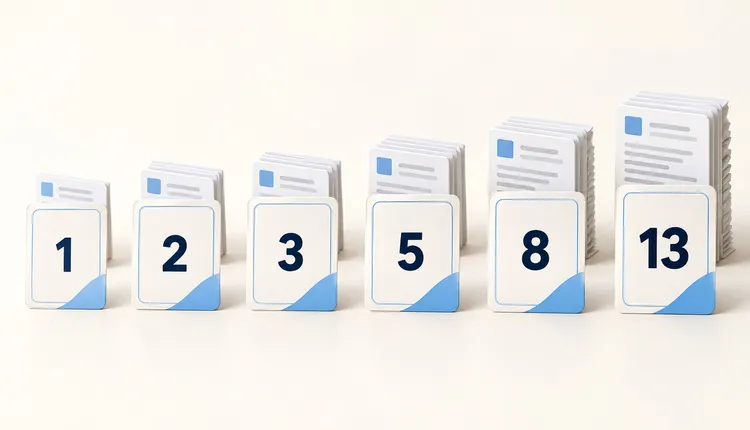
Story points examples: a reference scale from 1 to 13
Six backlog examples to help your team compare work, question assumptions, and choose its own reference stories.
Read guide
How to run a sprint retrospective that leads to action
Use a practical 60-minute agenda to collect evidence, choose the right discussion, and leave with one or two owned improvements.
Read guide